
Shipping one car is already a project. Shipping two, three, or a small fleet can feel like playing 4D chess with calendars, drivers, and delivery windows. The good news: if you plan it right, moving several vehicles at once is usually easier and cheaper per car than doing a bunch of separate shipments.
When multi car transport makes sense
There are a few situations where it is almost always better to treat the cars as one project instead of separate jobs.
Family relocation
Typical case: two adults, two cars, maybe a third vehicle like a small truck or a weekend toy. You are moving several states away and you would like everything to arrive around the same time.
Multi car shipping helps because:
- you deal with one booking and one main contact instead of several
- the dispatcher can try to keep all vehicles on the same truck or in the same time window
- you usually get a better per car rate than if you booked each one on its own
Snowbirds and seasonal moves
If you move between a northern and southern home, you might ship one daily driver plus a second car or small SUV. Many carriers and brokers openly advertise snowbird and multiple vehicle shipping discounts for exactly this reason.
Small fleets and micro businesses
Examples:
- a small construction company with several pickups and vans
- a rental host moving multiple cars to a new city
- a dealership redistributing inventory between two lots
Fleet and multi car transport pages from big carriers highlight how common this is for dealers and small businesses that need several vehicles in one move.
Friends and roommates teaming up
Sometimes it is just a group of people who are all moving along the same route. If pickup and delivery points are close enough, you can combine several cars into one booking and share the benefits of multi car pricing.
Is it cheaper to ship multiple cars together
Short answer: usually yes.
Most large transporters say that multi car shipments come with volume discounts because the carrier uses the truck more efficiently and processes one booking instead of several. Mainly, it’s explained that shipping several vehicles on one carrier often reduces the per car price by about ten to twenty percent compared to separate shipments.
This multi car shipping guide will shows price examples where per vehicle cost depends on distance, trailer type, and number of cars but still lands in the same general range as standard car shipping, sometimes lower for large batches like dealer car transfers.
Think of it this way:
- the truck is already driving that route
- loading several of your vehicles uses the same driver and fuel
- dispatch does one set of calls and paperwork instead of three
You are not paying for the truck three times. You are paying once and splitting it.
Simple price example
These numbers are illustrative, based on typical ranges you can see in multi car cost breakdowns and general US car shipping averages.
| Scenario | Distance | Trailer | Cars | Approx price per car |
| One sedan, solo shipment | 800 mi | open | 1 | $800–$1,000 |
| Two sedans, same route, same dates | 800 mi | open | 2 | $750–$900 |
| Three vehicles, same route, same dates | 800 mi | open | 3 | $650–$850 |
| Ten cars, dealer transfer | 800 mi | open | 10 | $600–$800 |
The more vehicles you bundle, the more flexible you are on dates, and the easier your pickup and drop off points, the better your chances to land in the lower part of that range.
How multi car transport actually works
The basic process for shipping multiple cars is almost the same as shipping one car. Our cross-country car shipping guide shows how standard car shipping is just a sequence of quoting, booking, pickup, transit, and delivery with a Bill of Lading at both ends.
With multi car transport, the main differences are in logistics and scheduling.
From quote to delivery, what happens
- You gather details
- total number of vehicles
- year, make, model, and running condition for each
- exact pickup and delivery addresses or at least cities and zip codes
- your ideal pickup window and any hard deadlines
- total number of vehicles
- You request quotes
While most companies recommend getting several quotes, we recommend simply using our shipping calculator to estimate the price based on distance, vehicle type, and transport method. - You decide on open or enclosed
- open carrier is the standard, cheaper option and can often move eight to ten vehicles at once
- enclosed is used when some or all cars are high value or collectible
- open carrier is the standard, cheaper option and can often move eight to ten vehicles at once
- The broker or carrier builds a plan
We try to combine your cars on the same truck if possible, or at least keep them on trucks that move on the same timetable. For very large loads, we might coordinate several carriers. - Pickup day
- the driver calls you a few hours before arrival
- each vehicle is inspected and documented on the Bill of Lading
- cars are loaded and secured in an order that fits the route and weight distribution
- the driver calls you a few hours before arrival
- Transit and updates
We usually offer some combination of dispatcher calls, text updates, or online tracking for multi car shipments, depending on the specific route and trailer type. - Delivery
- driver calls before arrival
- vehicles are unloaded and inspected again
- you note any damage on the Bill of Lading before signing
- final payment is settled according to your booking terms
- driver calls before arrival
Timeline is similar to regular car shipping. Note that regional trips usually take a few days, while coast to coast is often about a week, sometimes a bit more when multiple vehicles are loaded and unloaded at the same time.
Open vs enclosed for multiple cars
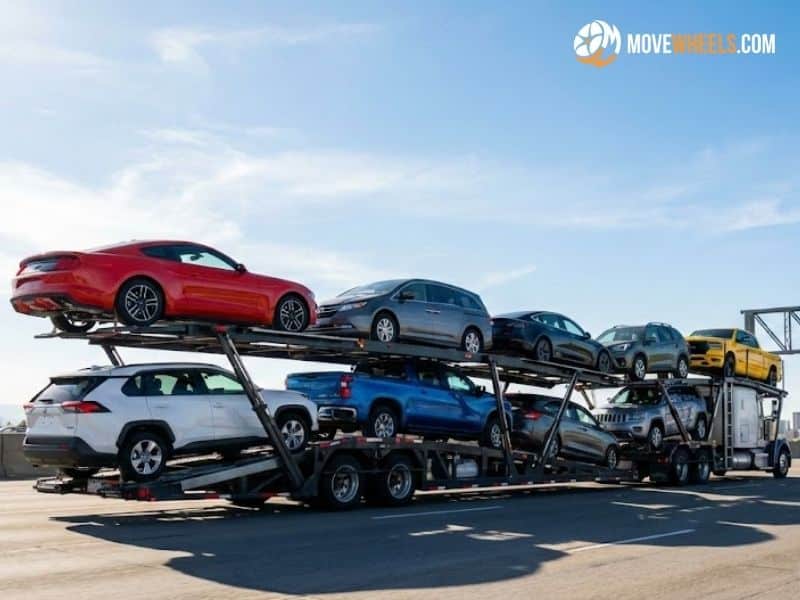
Multi car shipping is mostly done with open carriers. These are the familiar two level trailers you see on highways that can move around eight to ten vehicles at once.
Open multi car transport
Best fit when:
- you are moving regular daily drivers
- the cars are already used or a few years old
- cost and scheduling are the main priorities
Pros:
- lowest cost per car
- more trucks available on most routes
- easier to schedule on a specific week
Cons:
- vehicles are exposed to weather and road dust
- not ideal for rare, show, or freshly restored cars
Enclosed multi car transport
Used for:
- classic, luxury, or exotic cars
- collector fleets
- freshly painted vehicles
Enclosed carriers are smaller, usually holding a handful of cars, and average costs are significantly higher, roughly about twice the rate of open carriers for similar distances according to enclosed transport benchmarks.
Mixed strategy
Some families and small fleets split the shipment:
- two daily drivers in open transport
- one valuable car in enclosed
If budget allows, you can even send the high value car first and follow later with the rest on a cheaper open carrier.
What affects the price when you ship several cars
Multi car transport is still built on the same cost drivers as any other shipment. MoveWheels breaks out the main factors as vehicle type and size, vehicle condition, distance, trailer type, and insurance coverage.
Multi vehicle shipments simply apply those rules to several cars at once.
Number of vehicles and route efficiency
Carriers like multi car jobs because they load more of the truck in one stop and drive fewer empty miles. Note that consolidating cars on one carrier is what makes volume discounts possible.
However, the discount assumes:
- cars share the same pickup window
- pickup and drop off points are the same or reasonably close
- there are no complicated special requirements for one of the vehicles
If one car is non-running, oversized, or located far from the others, it will pull the average price up.
Distance and route popularity
Longer trips cost more in total, but per mile rate often goes down past a certain distance. This pattern is visible in both single and multi car cost examples from large transporters.
Also important:
- popular lanes, for example between large metro areas, usually have more trucks and more competitive pricing
- remote pickup or delivery points increase cost because of detours and extra fuel
Vehicle type and condition
Multi car shipments often mix:
- sedans and compact cars
- crossovers and SUVs
- pickups and vans
Heavier or larger vehicles take more space on the trailer. That can reduce the total number of cars on the truck and the quote will reflect it. Blogs that cover vehicle type pricing explain how full size trucks or heavy equipment push the cost up even when the route is the same.
Non running vehicles can still be shipped, but they need winches or special loading which usually means a surcharge.
Timing and season
Two factors hit multi car shipments especially hard:
- seasonal demand
Snowbird season, end of college semesters, and major moving peaks mean more demand, especially in and out of places like Florida, Texas, and Arizona. - lead time
Last minute bookings with fixed dates are difficult when you need several car slots on the same truck. You might still find a carrier, but any discount will shrink or disappear.
Pickup and delivery strategies for multiple vehicles
A big part of saving money with multi car shipments is how you arrange addresses and timing.
One pickup, one delivery
Cheapest and easiest pattern:
- all vehicles at the same pickup address or within a very short distance
- all going to the same city and ideally the same delivery point
Carriers and multi car guides repeatedly mention that consolidating locations is what lets them offer the best volume discounts.
Clustered addresses
Real life is rarely perfect. A practical approach:
- cars start within the same metro area
- final destinations are in neighboring suburbs or towns
In that case the dispatcher can still plan one logical route. You might not get the absolute lowest possible rate, but it will still usually beat three completely separate shipments.
Split pickups and split drops
Some companies allow:
- different pickup addresses on the same general route
- several delivery addresses in the destination region
Note that this is possible but usually carries extra fees and makes the shipment less efficient. The cheapest option remains all cars at one starting point and one end point.
If you must split, try to:
- keep all addresses accessible for large trucks
- avoid tight city centers where a full size car hauler cannot safely park
- be flexible with exact pickup times for each car
Preparing several vehicles at once
Most car shipping checklists talk about cleaning the car, removing personal items, checking for leaks, and documenting condition. Our guides emphasize the same steps: clean exterior and interior, quarter tank of fuel, photos, then detailed inspection on the Bill of Lading.
When you have two to five cars, the core tasks are the same, but you need more structure so nothing gets missed.
One shared checklist for all cars
Use a simple grid and do the same actions for each vehicle:
- wash and quick interior tidy
- remove personal items and valuables
- disable toll tags and parking passes
- check fluids, tire pressure, and battery
- leave about a quarter tank of fuel
If one of the cars has a known issue, for example a weak battery or oil leak, tell your broker in advance so they can prepare the driver.
Keys, documents, and contact info
For single car shipping you can improvise. With multiple cars, it is risky.
Prepare:
- one labeled key set for each vehicle
- copies of registration or any documents the carrier requests
- a simple list that ties license plate to last four digits of the VIN and key label
- one main contact person for the driver, and one backup number
Nothing is more annoying than a truck arriving on time while you are still hunting for the second set of keys.
Photos and condition notes
Take photos of each vehicle from:
- front, back, both sides
- close ups of existing damage, for example scratches, dents, or cracks
Store them in separate folders on your phone or cloud, labeled by car. If something happens during transit, this makes the insurance process much simpler, especially when several vehicles are involved. Most multi car pages point out that insurance is included, but documentation is still your responsibility.
Specific tips for families vs small fleets
Multi car shipping looks a bit different depending on who you are.
Families and private owners
Focus on:
- timing with your move
Decide whether you want the cars to arrive before you, at the same time, or shortly after. Build that into your pickup window. - who drives and who flies
Sometimes one person drives a remaining car while others fly. If you are shipping two cars and driving one, be honest about how much energy you will have on moving week. - kids and pets
Once the cars are loaded, you cannot quickly grab the stroller or pet carrier from the trunk. Pack anything critical into your personal luggage ahead of time. - multi car discount plus other discounts
Many companies offer separate discounts for military, students, or snowbirds. Some, like A1 Auto, explicitly say that military and multi car discounts can stack in some cases.
Small fleets and micro businesses
Your priorities are slightly different.
- downtime and cash flow
The vehicles are often revenue generating assets. Plan shipment so they spend as little time idle as possible. - location access
Make sure both pickup and delivery points can physically accept a full size truck. For tight urban locations, arrange a nearby parking lot that can handle the carrier. - policy and process
Have one person responsible for coordinating all vehicles, checking Bills of Lading, and approving any changes during transit. - insurance and risk
Multi car carriers normally provide cargo insurance, but limits and deductibles differ. Fleet shipping pages advise checking coverage per vehicle, not only per load.
Common mistakes when shipping several cars
A lot of headaches can be avoided by dodging a handful of predictable traps.
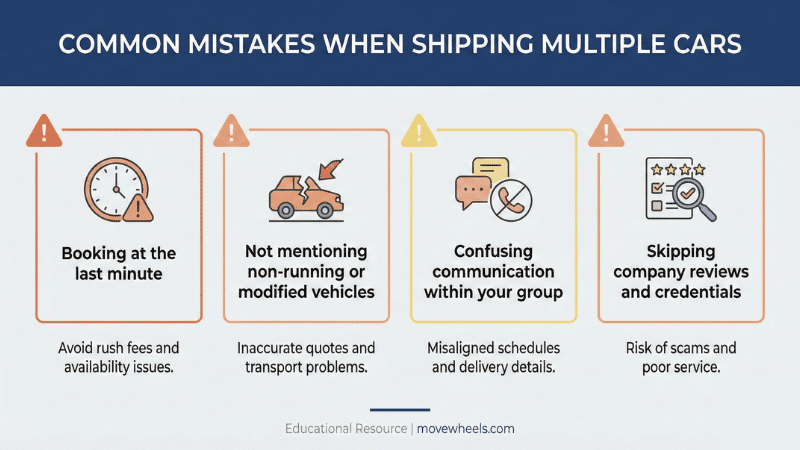
Last minute booking with rigid dates
Multi car jobs occupy several spaces on a truck. If you insist on fixed dates and call very late, dispatch has much less flexibility and prices rise fast.
If you can give a wider pickup window, even three to five days, you give carriers room to optimize routing and often get better pricing.
Hiding non-running or modified vehicles
Trying to slip a non-running car, lowered car, or heavily lifted truck into a multi car shipment without mentioning it is a bad idea.
- it may not fit on the planned truck
- last second changes at pickup can trigger fees or even cancellation
Carriers and brokers are very clear that vehicle condition and modifications affect the carrier type and price.
Poor communication within your own group
When one person books the shipment but several people own the cars, information can get lost.
Avoid this by:
- sharing the booking confirmation and driver contact
- agreeing ahead of time who will be present at pickup and delivery
- making sure everyone is ok with the chosen dates and locations
Not checking reviews and credentials
For multi-car shipments, the stakes are higher. If something goes wrong, it goes wrong for several vehicles at once.
Basic due diligence:
- check USDOT and MC numbers in official databases
- read recent reviews, not only old ones
- look at how the company responds to complaints
How MoveWheels can handle multi car shipments
MoveWheels is a broker that focuses on matching your shipment to carriers on the right routes with the right equipment. The main site and guides make it clear how quotes are calculated based on distance, vehicle type, trailer type, and timing.
For multi car projects, that translates into a few specific advantages:
- one quote for several vehicles
You provide all car details at once and get one coordinated plan instead of three separate conversations. - access to both standard open haulers and enclosed carriers
This lets you mix daily drivers and high value vehicles if needed. - transparent pricing logic
Our team explains what drives cost for different vehicle types, so it is easier to understand how changes to your shipment (another car, different trailer type, tighter dates) will affect the quote.
If you are considering shipping several vehicles, it is worth preparing:
- a list of all cars with basic specs
- your realistic time window
- whether you are open to sending some cars earlier and some later
That way, when you request a quote you are not just asking “how much,” you are presenting a clear picture that a dispatcher can optimize around.
Final thoughts
Multi car transport is not a special, exotic service only for big dealerships. Families, small businesses, and everyday people use it all the time, and large carriers ship thousands of vehicles this way each month.
If you keep three core ideas in mind, you are already ahead of most shippers:
- Bundle what you can
Same route, similar dates, one pickup and drop off if possible. - Be honest about your vehicles
Size, condition, and modifications matter more when several cars share the same trailer. - Plan a little earlier than you think you need
Multi car discounts are easiest to unlock when dispatch has time to line everything up.
Do that, and shipping multiple cars at once becomes less of a gamble and more of a straightforward logistics project that you can control instead of fear.
Similiar Articles
- How to Ship Multiple Cars at Once: Family Moves, Small Fleets, and Bulk Discounts
- How One of the Top RV Shipping Companies Stands Out
- Best Online Car Buying Platforms – The Ultimate Guide
- The Definitive 2025 Guide to the Cheapest Ways to Ship a Car
- Costco Auto Transport Made Easy – Ship Your Car Hassle‑Free with MoveWheels
- Is Your RV Ready for Spring Travel? Pre-Transport Checklist
- Open Vehicle Transport: How it Works and How Much It Costs in 2024
- Secure and Sophisticated: Your Complete Guide to Enclosed Auto Transport with MoveWheels
- New Year, New Motorcycle: Top Motorcycles` Choice among Americans in 2024
- How Vehicle Type Impacts Transportation Costs: From Cars to Heavy Equipment